Purchasing a used truck has the potential to save you money, but there are risks involved as well. In order to be able to achieve the highest return on your investment, there are five essential conditions that you should take into account before purchasing a used truck.
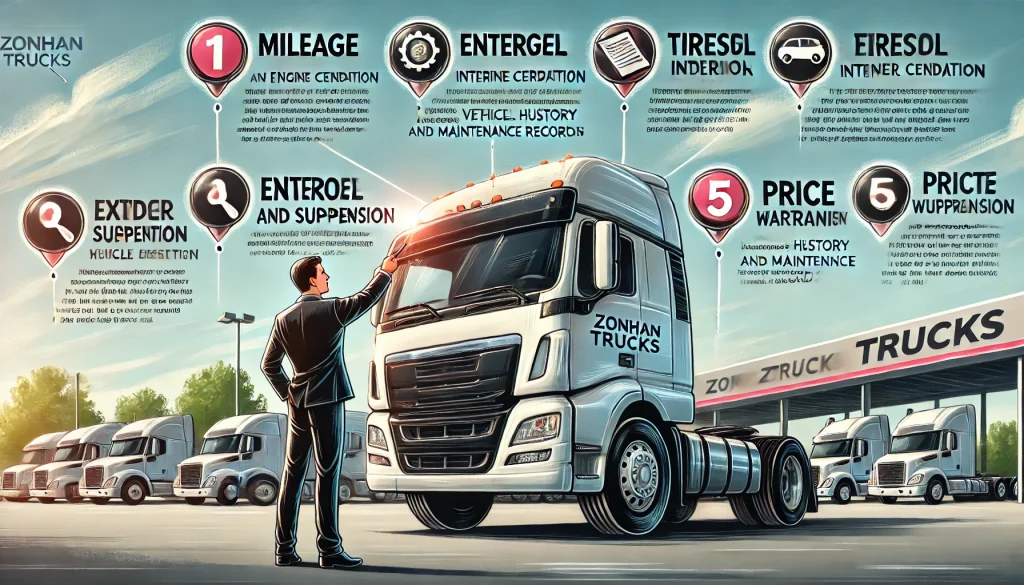
Truck’s Age and Mileage
Why Age and Mileage Matter
The condition (age, and mileage) of the truck plays a big part in how much useful life is left in it, and what maintenance you’re going to need. Trucks that are older and were driven extensively may be more worn out, leading to expensive repairs in the future.
What to Look For
Age: If a truck is more than 10 years old, its value likely has been depreciated heavily, but if it’s in good condition, it may still be worth something.
Mileage: Generally speaking, the lower the mileage a truck has, the more life it likely has left. A general rule of thumb is to try and find one with less than 150,000 miles on it, depending on maintenance history.
Before you make your decision, be sure that the truck is neither too old nor has too much mileage to fit your needs and budget.
Vehicle History Report
The Importance of Checking History
The history of a vehicle is crucial when purchasing any used vehicle, not least one that’s a truck. It reports history on the truck such as accidents, title issues and also whether a truck has been used heavily like for hauling or towing.
Key Points in the Report
Accident Check: Steer away from trucks that have experienced major accidents, because they may have some concealed structural damage that can affect its performance.
Previous owners: One is enough to have taken care of it (hopefully) past this point, more than that and things can start slipping through the cracks.
Maintenance Records: The more information you have available about how well the truck was maintained, the better shape the truck is going to be in.
Make sure it is from a reputable service like Carfax or AutoCheck.” By doing so, you don’t have to be plagued with surprises after purchasing.
Inspection and Condition
The Place of Inspection in Purchasing
The status of the truck is what matters when you go through your purchase. Always get a professional mechanic to look the truck over – especially if you don’t know much about vehicles.
What to Check
Engine and Transmission: See if you hear anything unusual and make sure that the engine sounds goes smoothly. Make sure there are no leaks and evaluate the fluid levels.
Frame Body: Check for rust and any type of damage. A truck’s frame is the backbone of the vehicle; if it has damage, that could signal a lot of problems.
Suspension and Tires: Inspect the suspension for wear. Make sure the tires are in good condition as new ones could be costly.
Brakes & Alignment: Make sure brakes are firm when braking and that there isn’t too much uneven tire wear which could indicate an alignment problem.
Don’t Skip This Step
An inspection may cost a little money up front, but it can save you the hassle of buying a truck that will need expensive work in the near future.
Truck’s Intended Purpose and Usage
What Do You Plan to Use the Truck For?
Knowing what you’ll intend to do with the truck can help inform or steer your decision. Is it going to be used for personal commuting, commercial applications or heavy-duty things such as towing?
Things to Consider
Towing Capacity – If you are planning to help tow heavy loads, make sure that the truck has a towing capacity, which is suitable for your needs. Commercial grade hauling should only be done with a commercial towing vehicle and equipment.
Size of the BedThe bed size is one thing you can never ignore. If you haul really big stuff around, the bigger bed size might be more useful.
Gas Mileage : If you’re going to be using the truck as your daily then gas mileage should be a top priority. The truth is, while trucks tend to get fewer miles per gallon than cars, some newer models can deliver more miles per gallon than some cars.
Cost of Ownership
Total Cost of Ownership Matters
The price of the purchase is but a single factor in owning a truck. You also have to calculate other costs such as insurance, maintenance and fuel.
Calculate Additional Costs
Fuel Efficiency: A fuel inefficient truck may drive up operational costs per day, particularly if you use it a lot.
Insurance: Insurance rates for commercial trucks are frequently higher than those for personal vehicles. Keep this in mind when budgeting.
Maintenance: Certain trucks, especially older ones, may break down more often and need new parts such as transmissions or suspension. Examine the history and state of the car to estimate potential future costs.
Consider the cost of ownership by factoring upfront and ongoing costs to make an informed decision.
Conclusion
Used Truck It’s all about the details when buying a new/used truck. The best choice is going to be influenced by age, mileage, vehicle history, condition, intended use and total cost of ownership. By researching and performing a professional inspection, you will be making sure that the truck you buy is worth investing in and will perform reliably for years.
Consider these 5 key factors, and you have a very good chance of making the right buying decision that will not only be wallet-friendly, but also will help prevent many common problems with used car purchases.