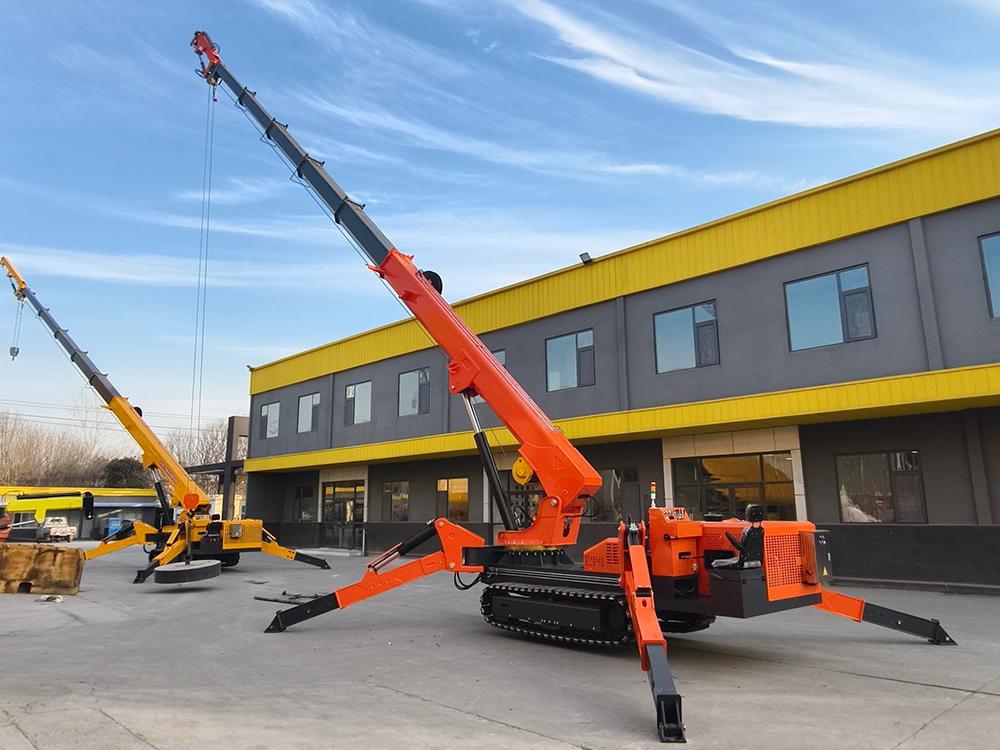
With the development of urban construction towards refinement and narrow-area operation, spider cranes have become essential equipment for indoor installation, ancient building restoration, narrow alley construction and other scenarios, thanks to their compact body, flexible outriggers and precise control. However, whether purchasing a new machine or a used one, neglecting core details is likely to lead to problems such as wrong model selection, frequent failures and prominent safety hazards. The following 6 key details are essential checks before purchase, helping you avoid industry pitfalls and select equipment that is suitable for working conditions and safe and reliable.
spider crane
Core Premise: Confirm Working Condition Adaptability
Clarify Indoor Operation Requirements
For indoor operations, confirm whether the body width can pass through elevators and doorframes smoothly. Prioritize models with a contracted width of less than 1 meter to avoid difficulties in equipment entry.
Adapt to Complex Outdoor Terrain
For outdoor construction, pay attention to crawler passability. Prioritize models with rubber crawlers, which have low ground pressure, can effectively avoid damaging the ground, and are suitable for soft sites to improve operational stability.
Verify Lifting Weight and Working Radius
Do not blindly pursue tonnage. Confirm the requirements of key working conditions with reference to the load curve table; for example, a
3 tons spider crane can lift 3 tons at close range, but its lifting capacity may be less than 1 ton at the maximum radius, avoiding the embarrassment of “being able to lift but not being usable”.
Spider Crane Core Parameters: Avoid False Labeling Traps
Check Boom and Outrigger Performance
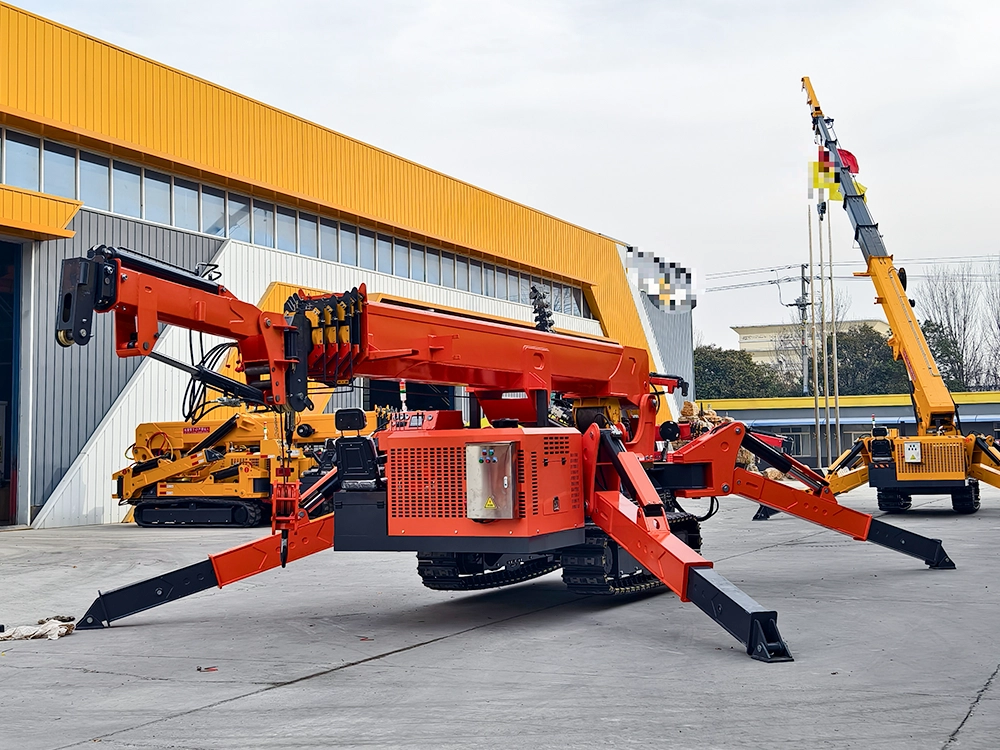
Focus on confirming the number of boom sections and fully extended length to ensure it covers the actual working height; check the deployment method and leveling accuracy of the outriggers, as the automatic leveling function can greatly improve operational safety.
Select a Suitable Power System
Prioritize electric models for indoor operations to eliminate exhaust pollution; for alternating indoor and outdoor operations, oil-electric dual-drive models can be selected to meet multi-scenario needs; at the same time, check the micro-motion control accuracy to ensure the safety of hoisting precision equipment.
Equipment Status: Check New and Used Machines Differently
Key Inspection Points for New Machines
Verify the factory certificate and inspection report, and confirm that the body number is consistent with the documents; focus on checking core components such as hydraulic pumps and steel wire ropes, and prioritize supporting parts of well-known brands to ensure equipment durability.
Key Inspection Points for Used Machines
Check the working hours of the equipment. The reasonable annual working hours are 1000-2000 hours; excessive hours indicate severe wear; check the boom and outriggers for welding and rust marks, and hydraulic pipelines for leakage to eliminate accident-prone machines.
Safety Bottom Line: Confirm Complete Safety Configuration
Core Safety Devices
It must be equipped with overload protection and moment limiters to ensure that when the lifting weight or moment exceeds the standard, it can automatically alarm and cut off dangerous actions; the outrigger protection device must be intact to prevent tipping over caused by operation in an unleveled state.
Auxiliary Safety Devices
Emergency stop buttons and hook anti-drop devices must be flexible and effective; for outdoor operations, confirm that the windproof early warning device is complete. Each safety configuration is directly related to the safety of operators and cannot be ignored.
Follow-Up Guarantee: Check Compliance and After-Sales Service
Compliance Inspection
For imported equipment, confirm that it meets local special equipment standards and can smoothly go through customs clearance and registration procedures; for domestic use, check that the equipment can be registered for use and that operators must hold certificates to work.
Confirm After-Sales Guarantee
Prioritize suppliers with local after-sales outlets and confirm the spare parts supply cycle; for new machines, clarify the warranty scope of core components, and for used machines, you can request a short-term warranty to avoid lack of guarantee for later maintenance.
Cost Consideration: Calculate the Whole Life Cycle Cost
Calculate Additional Costs
Do not only focus on the bare machine price. Include the cost of accessories such as extension booms and hanging baskets, as well as related costs such as equipment transportation, disassembly and handling, to avoid budget overruns.
Consider Usage and Maintenance Costs
Calculate the usage cost in advance: for electric models, consider the charging and battery maintenance costs; for diesel models, calculate the fuel consumption; at the same time, include the daily maintenance costs and select models with better whole life cycle costs.
spider crane
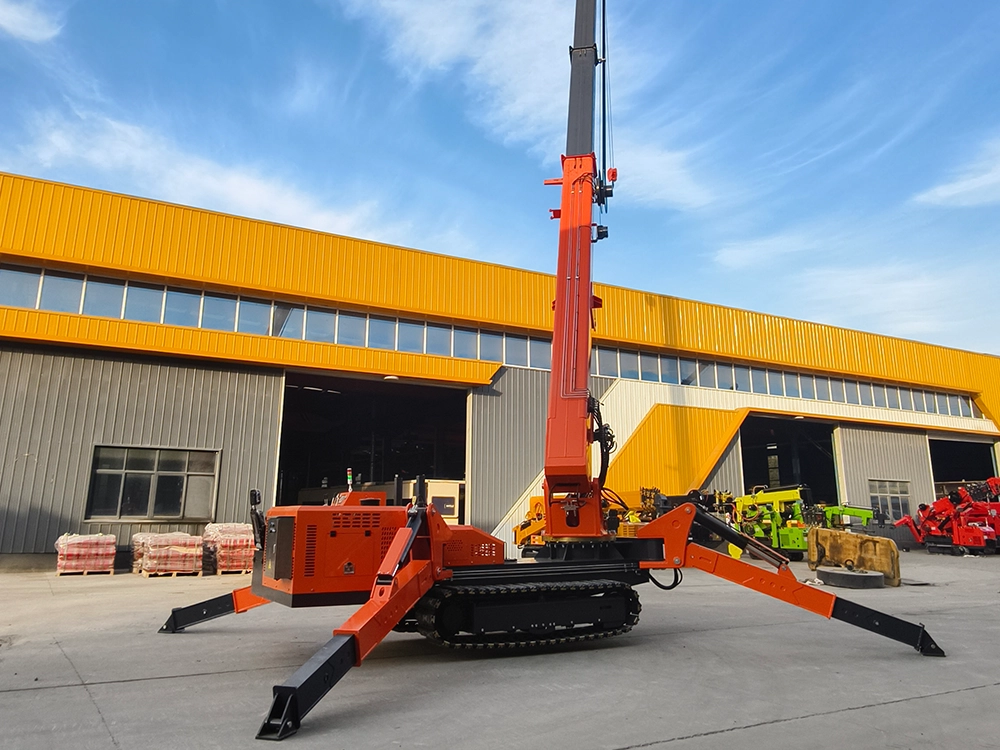
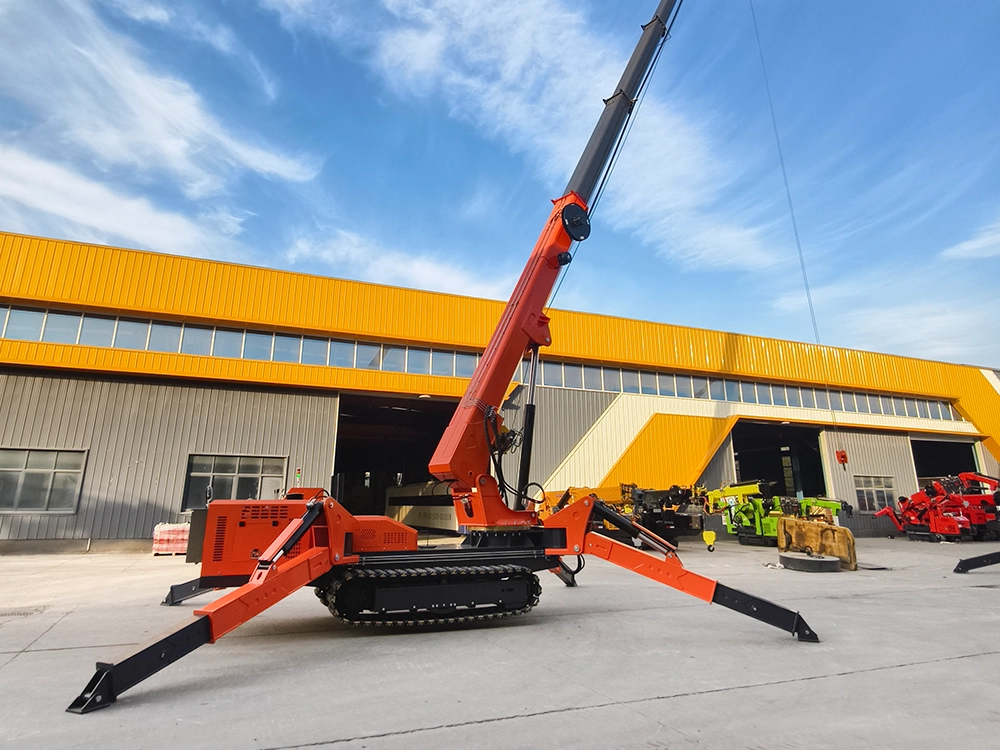
In conclusion, the key principles for purchasing a spider crane lie in practical adaptability, reliable operational safety and reassuring after-sales guarantee. The six key points mentioned above run through the whole procurement procedure, including equipment model selection, on-site machine inspection, qualification compliance verification and complete after-sales support.
A thorough item-by-item inspection can effectively help you steer clear of most common purchasing risks and hidden troubles. Selecting a spider crane that perfectly matches your actual construction working conditions will not only greatly boost overall construction efficiency, but also effectively eliminate potential safety risks and cut down long-term operating costs, thereby providing solid and reliable support for the smooth implementation and steady progress of all construction projects.